

Skip to content
Close
iStock-477418950

PARASOL-APOL1 SCIENTIFIC WORKSHOP

September 23, 2026
Arlington, Virginia

PARASOL_Logo[22368]

Proteinuria and Other Biomarkers as Endpoints for Clinical Trials in Kidney Disease
REGISTRATION

The PARASOL-APOL1 project is part of an international, multi-stakeholder effort to accelerate progress in kidney disease and explore potential surrogate endpoints for clinical trials. PARASOL brings together patients, clinicians, researchers, industry, and regulators around shared data and common goals.

In this final public scientific workshop, participants will hear concise updates on what the PARASOL-APOL1 data analyses have revealed to date, how these insights may shape future clinical trial design, and what they mean for patient care and drug development.

Sessions will feature brief presentations and moderated discussion, with ample time for questions and cross-sector exchange. This event is ideal for clinicians, scientists, regulators, drug developers, advocates, and trainees interested in clinical trials. Individuals affected by APOL1 kidney disease and their loved ones are warmly welcomed to attend. 

Registration is free of charge for academic, clinician, nonprofit, regulatory and patient / caregiver / general public attendees. In order to recoup the costs of the project, there is a registration fee for industry attendees equivalent to a bronze sponsorship level. If you would like to make separate payment arrangements, please contact parasol@is-gd.org before registering.

Register by September 8 to be part of the conversation and help shape the progress ahead.

2026-02 APOL1 Olabisi downsized
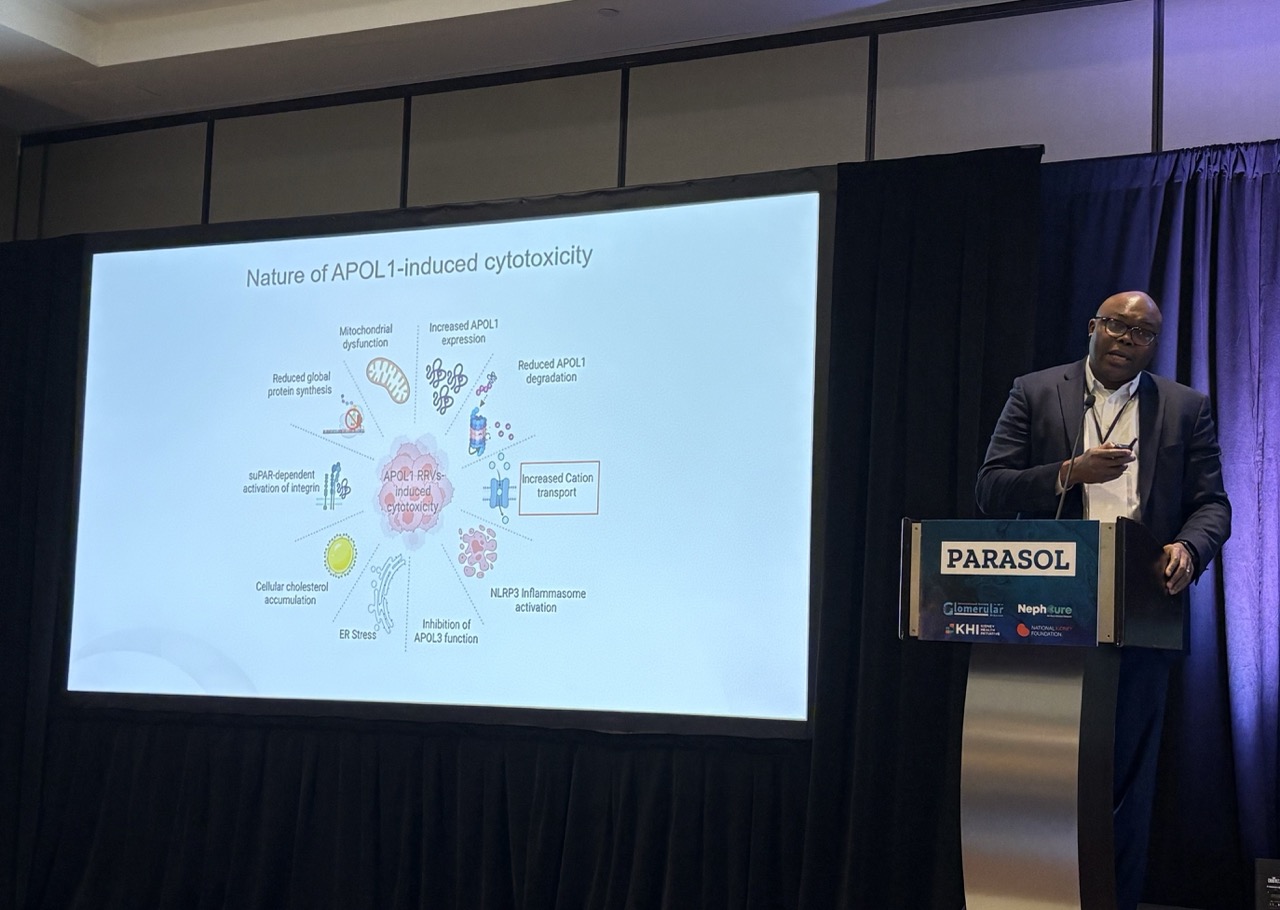
Dr. Opeyemi Olabisi (Duke University) explains biological mechanisms of APOL1 kidney disease at the PARASOL-APOL1 February 2026 interim meeting.

ABOUT THE WORKSHOP

BACKGROUND

The PARASOL (Proteinuria and Other Biomarkers as Endpoints for Clinical Trials in Kidney Disease) project is a global, multi-stakeholder collaboration created in 2023 to tackle barriers to efficient kidney disease trials—starting with FSGS and then expanding to APOL1-associated kidney disease and membranous nephropathy. Led by academic investigators and kidney health nonprofits working in close collaboration with regulators and patient representatives, PARASOL has built a shared data and analytics platform that brings together longitudinal registry data, detailed phenotyping, and rigorous statistical methods to better understand disease trajectories and potential surrogate endpoints. Through a series of focused workshops and webinars, the consortium has created a common language around disease definitions, harmonized trial endpoints, and developed practical guidance for using real-world data to inform study design.

To date, PARASOL has delivered proof-of-concept that pooled registry and longitudinal data can be used to evaluate candidate surrogate endpoints, clarify inclusion criteria, and de-risk rare kidney disease trials for sponsors and investigators. Building on this foundation, the current phase of PARASOL is focused on expanding disease areas, deepening analytic work on endpoints and subgroups, and strengthening partnerships with regulators and industry to translate findings into actionable trial strategies and future guidance. The overarching goal is to create a sustainable, scalable platform that accelerates the development of effective therapies for rare and complex kidney diseases by aligning stakeholders around shared data, shared methods, and a shared vision for more efficient, patient-centered trials.

Goals and Objectives

The goal of this scientific workshop is to advance the understanding of potential surrogate endpoints for approval of new treatments for APOL1 kidney disease. The workshop will be used to discuss the results of the PARASOL-APOL1 analyses and engage in a data-driven discussion with the larger community about the use of selected biomarkers as surrogate endpoints for the approval of treatments for APOL1 kidney disease.

Who Should Attend The workshop is open to anyone with an interest in the topic. The primary audience includes leading academic experts, interested pharmaceutical companies, regulatory agencies, patient representatives and advocacy groups, clinicians, researchers and individuals affiliated with medical professional societies, and other government agencies and members of the healthcare sector (e.g., payers).

ORGANIZERS

This workshop is led by the International Society of Glomerular Disease, with support from NephCure, the National Kidney Foundation, and the Kidney Health Initiative (KHI) of the American Society of Nephrology.


PARASOL-APOL1 LEADERSHIP

Laura Mariani
PRIMARY INVESTIGATORLaura H. Mariani

University of Michigan

Keisha Gibson
PRIMARY INVESTIGATORKeisha Gibson

University of North Carolina

Rulan Parekh
PRIMARY INVESTIGATORRulan Parekh

University of Toronto

Matthias Kretzler
SENIOR ADVISORMatthias Kretzler

University of Michigan
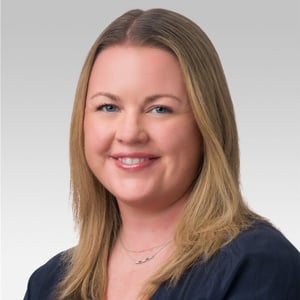
Abigail Smith
DATA ANALYSIS / BIOSTATISTICS LEADAbigail Smith

Northwestern University

Daniel-Gale
DATA ANALYSISDaniel Gale

University College London

noun-parasol-7174892-3456E8
DATA ANALYSISDavid Pitcher

UK Kidney Association

Margaret Helmuth
BIOSTATISTICSMargaret Helmuth

University of Michigan

Caroline Demas
BIOSTATISTICSCaroline Demas

University of Michigan

HaileyDesmond_headshot
DATA COORDINATING CENTER OPERATIONSHailey Desmond

University of Michigan

Ashley Rahimi
DATA COORDINATING CENTER OPERATIONSAshley Rahimi

University of Michigan

Barbara Gillespie
PROJECT OVERSIGHT & OPERATIONSBarbara S. Gillespie

International Society of Glomerular Disease
Laurel IPC intro 620x430
PROJECT OVERSIGHT & OPERATIONSLaurel Damashek

International Society of Glomerular Disease

Montrez Lucas headshot
PROJECT OVERSIGHT & OPERATIONSMontrez Lucas

International Society of Glomerular Disease